

July 2025
2024 Population Data
Cleveland Metropolitan Statistical Area
Analysis & Visualization
Ian McDaniel
Motivation
It can be challenging to sort through spreadsheets of data and visualize population trends in the Cleveland metropolitan statistical area (MSA), especially as the region sees a dynamic shift in population for the first time in decades. Methodicle simplifies the most recent data available in 2024 and makes it digestible, cutting through the noise. By analyzing historical US Census data and Vintage estimates between 2020 and 2024, we get a clearer picture of the rebound the region is currently experiencing.
View the data in spreadsheet form here.
Census
The United States Decennial Census is the most accurate report of population, however it only occurs every ten years at the beginning of the decade. The most recent census occurred in 2020 and the next will occur in 2030.
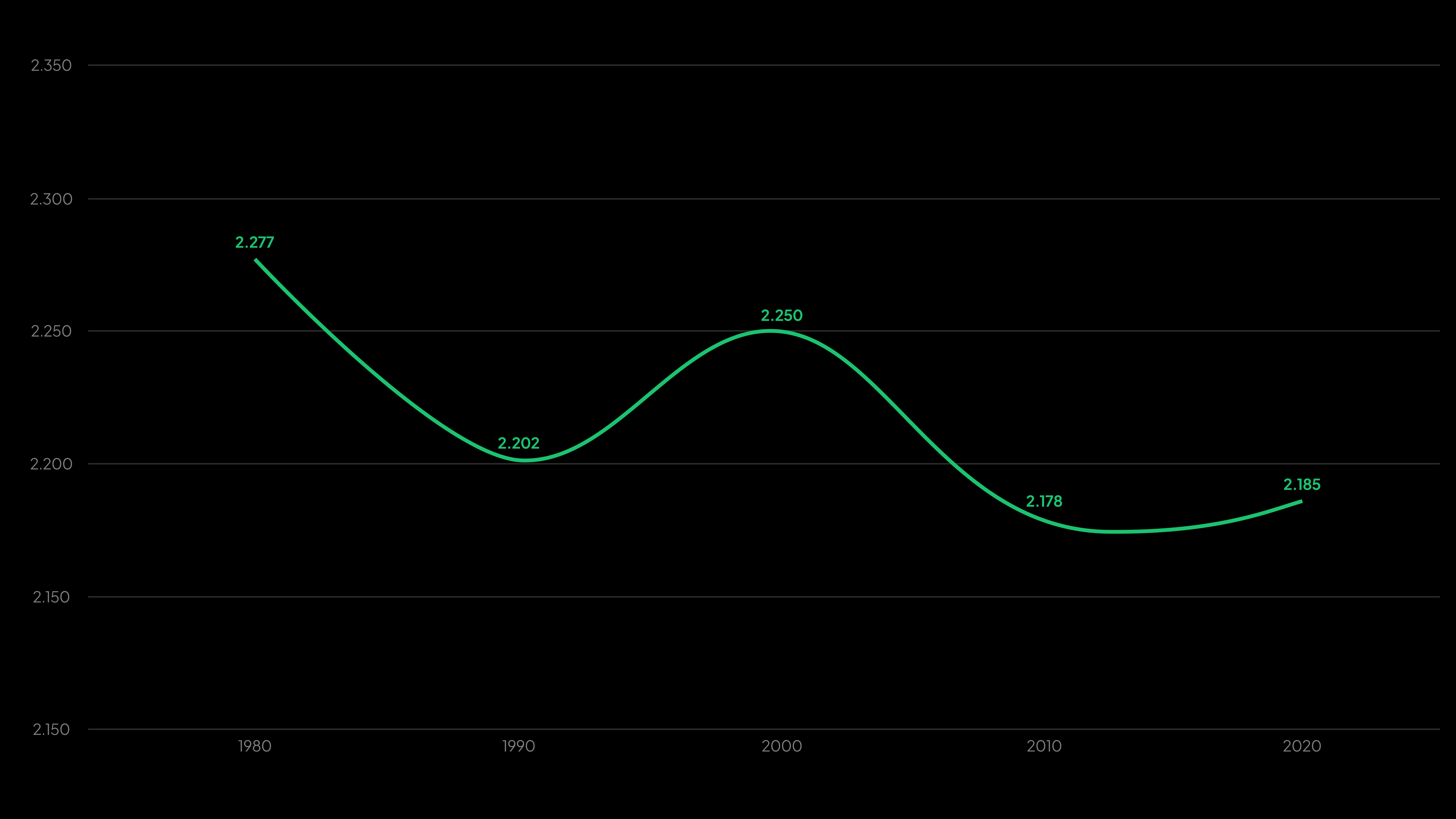
The Cleveland MSA has historically been losing population since 1980, fluctuating over the decades. The metro area most recently gained population between 2010 and 2020.
▷ Cleveland MSA population from 1980 to 2020 (millions).
Vintage
The census bureau’s Vintage estimate takes the most recent US census available (in this case, 2020) and estimates the population based on births, deaths, and net migration each subsequent year. Once the next census comes around, the process repeats.
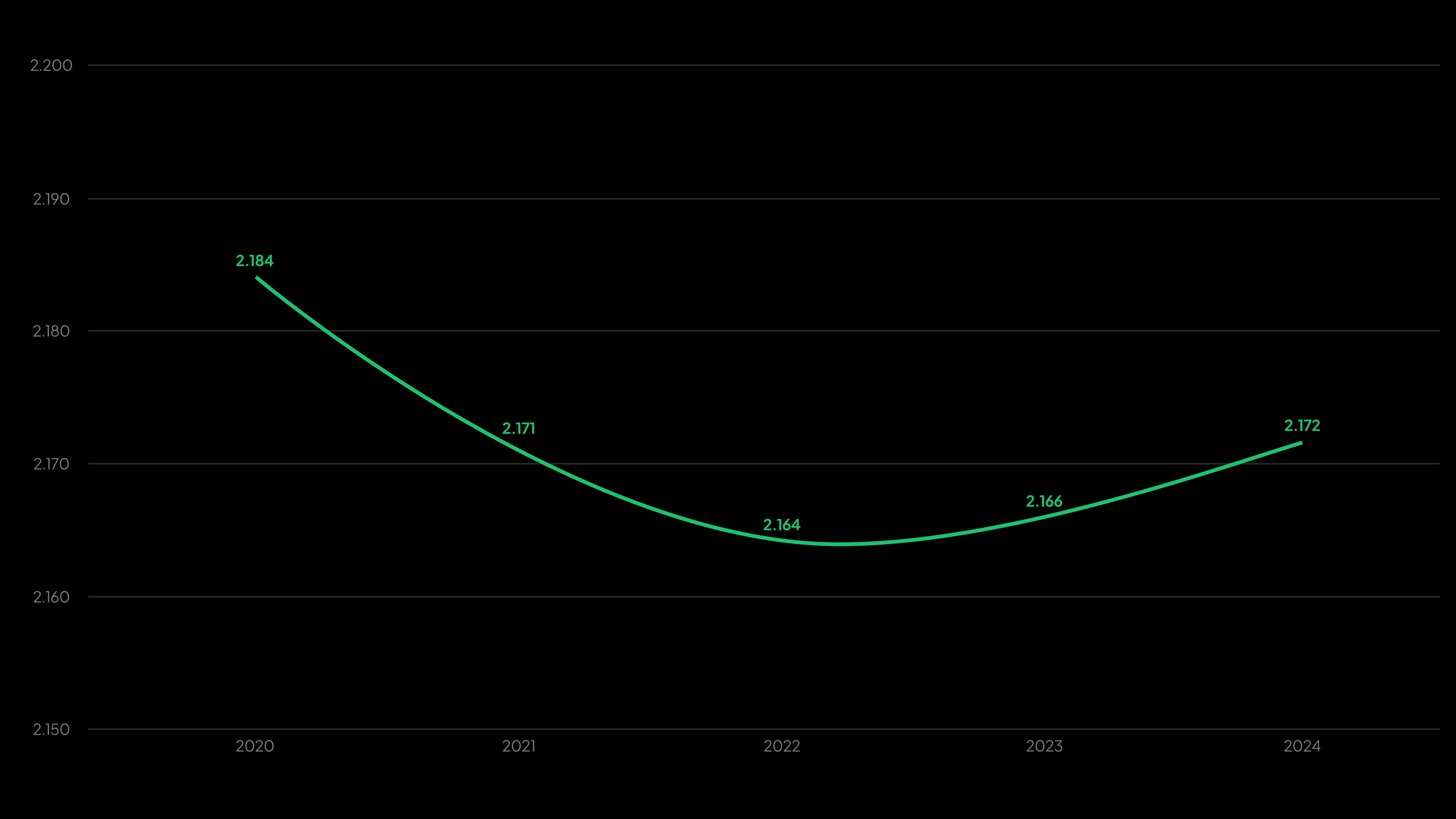
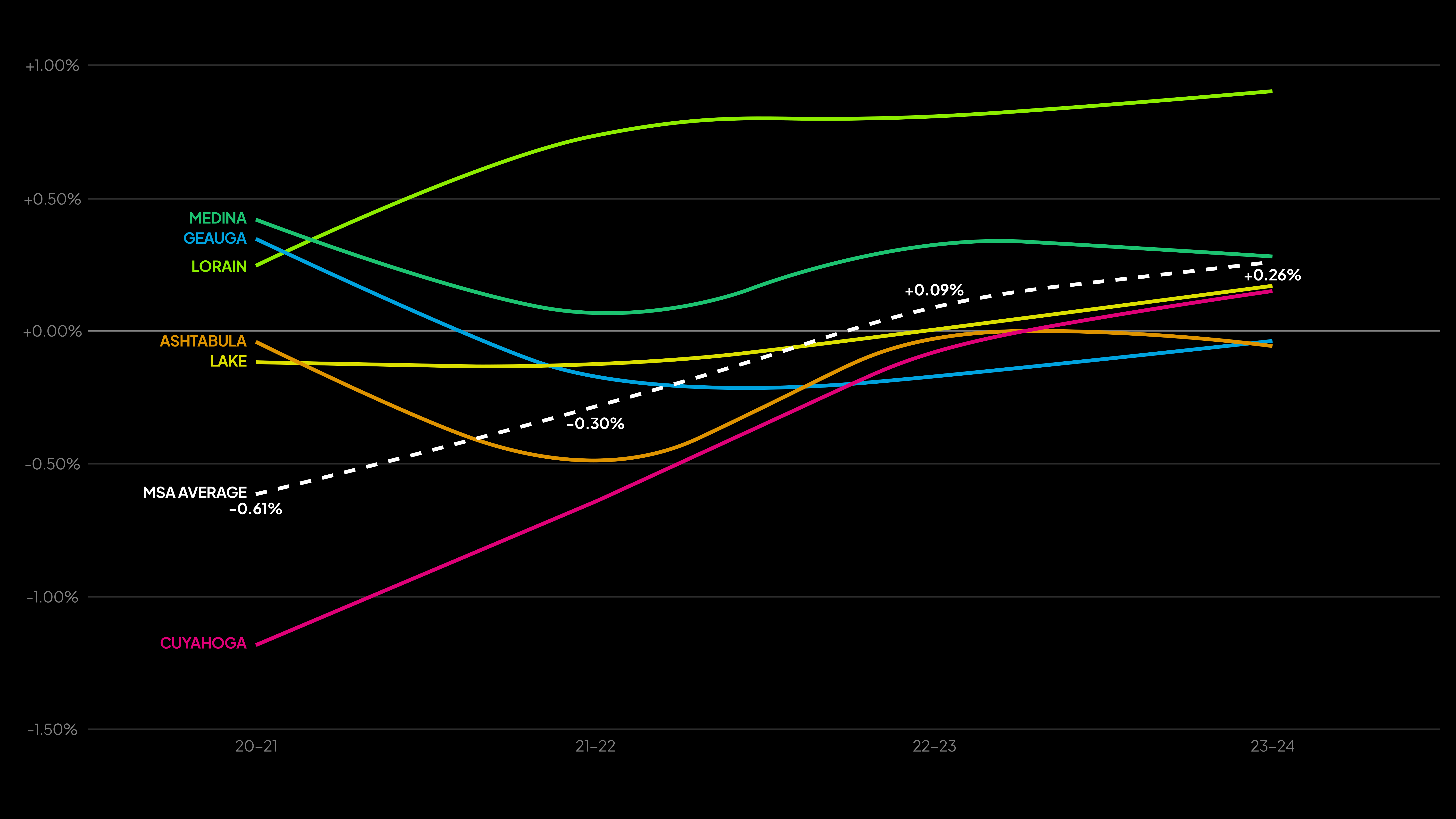
The Cleveland MSA experienced a population decline during the COVID-19 pandemic, but in the past three years, the region has seen rebounding growth, helped in large part by both the city of Cleveland proper and Cuyahoga County no longer losing population.
▷ Cleveland MSA population estimates from 2020-2024 (millions).
Cleveland MSA Growth Rates, 2020-2024
Source: US Census Bureau Vintage 2024
Promoting urban planning concepts throughout Cleveland and Northeast Ohio – a vision of the region’s future by and for the people built on ambitious, practical and transformative ideas.
© 2025 Methodicle.
 Methodicle